Zhob Meteorite: Balochistan, Pakistan's 2020 Fall Explained
Meteorites updates · Pakistan guide · Sources reviewed 26 October 2026
Zhob is a documented meteorite from Balochistan, Pakistan, that fell on 9 January 2020. The province is also written as “Baluchistan” in older references and in the Meteoritical Bulletin Database. This guide explains the recorded fall, what its H3-4 classification means, and why a fragile stone from this region is useful to planetary science.
This is a guide to an established historical fall, with a link to research data released in 2026. It is not an announcement that a new meteorite has fallen today, and it does not identify any reader's specimen as Zhob.
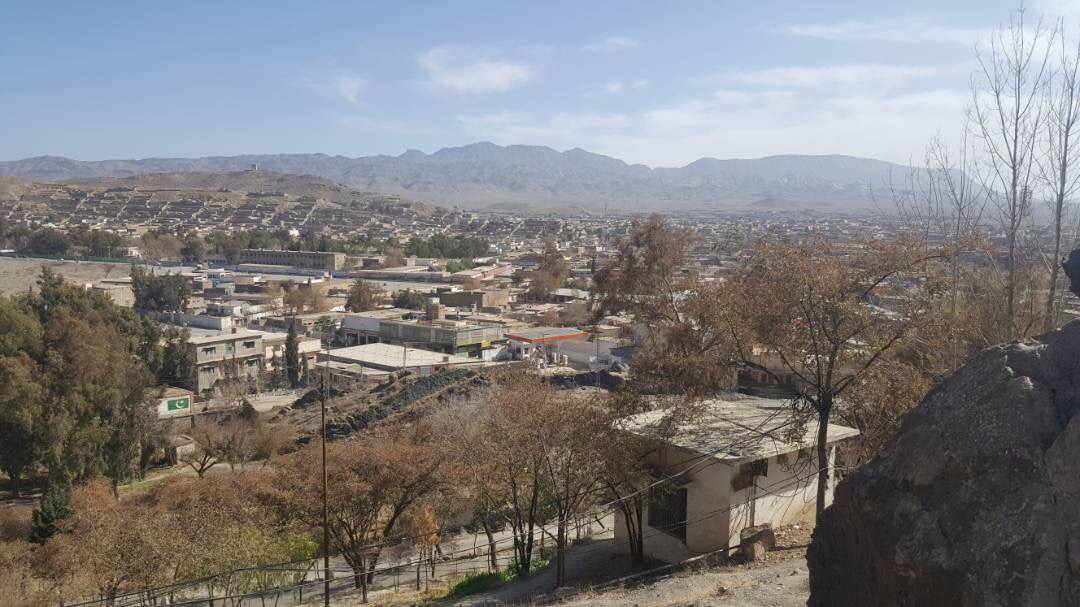
The Zhob meteorite: what is documented?
The official Zhob entry records a confirmed fall in the Zhob District of Balochistan. Its history describes a bright fireball and sonic booms at approximately 6:30 p.m. local time on 9 January 2020. Stones were recovered in an area roughly 12 kilometres northeast of Zhob; the account also describes one stone passing through a house.
The record lists four recovered stones with a reported combined mass of about 18.96 kilograms. That is a reported total for several pieces, not the weight of one enormous stone. One listed component mass is approximate, so the extra digits in a nominal sum should not be treated as four equally precise measurements.
| Field | Recorded information |
|---|---|
| Official name | Zhob |
| Fall date | 9 January 2020 |
| Classification | H3-4 ordinary chondrite |
| Reported material | Four stones; about 18.96 kg in the initial record |
Arizona State University's 4 March 2020 classification announcement identifies Laurence Garvie's work on the meteorite and describes dark fusion crust, broad surface depressions, and lighter fragments inside a broken stone. These are observations of documented Zhob material. They are not a checklist that can authenticate an unrelated stone.
What does “H3-4 ordinary chondrite” mean?
Ordinary chondrite is a scientific group of stony meteorites. “Ordinary” does not mean scientifically uninteresting. Chondrites can preserve small rounded components called chondrules, which record early high-temperature processes before the present rock was assembled. A stony meteorite can also contain metal grains; that does not make it an iron meteorite.
The letter H identifies one of the ordinary-chondrite chemical groups, commonly described as having relatively high total iron compared with the L and LL groups. It is not a price grade, a hardness rating, or proof obtainable with a hand magnet.
For Zhob, the classification describes a breccia: fragments of one rock component set within another finer material. The official interpretation is H4 fragments, or clasts, in an H3 host matrix. The numbers concern mineral and textural processing on the parent body; they are not a temperature measured during the 2020 fall. Read Module 8 on chondrites for the wider classification framework.
Zhob: fragments within a host rock
A rock fragment
A rock fragment
H3 host matrix
Finer material surrounding the fragments
Together: an H3-4 ordinary-chondrite breccia
Why researchers are still studying Zhob
A public dataset by Taylor Davis, Laurence Garvie and Christian Hoover was released on 11 June 2026. The research record and data include microscopy and mechanical measurements of Zhob. The dataset description discusses mineral fragments, chondrules, metal and sulfides within a porous and fractured structure.
This gives students a useful lesson: hard mineral grains do not automatically make an equally strong whole rock. Spaces and weak connections between grains can influence how a sample breaks apart. Researchers examine several scales because a measurement within one grain can answer a different question from a test involving many grains and their boundaries.
Friability means a material's tendency to crumble under repeated small mechanical stresses. The dataset links this behaviour to rock structure. Such laboratory work helps researchers think about asteroid surface material, but it does not establish that every asteroid has the same strength as Zhob. Do not try to reproduce destructive experiments on a possible find; preserve it for appropriate examination.
Zhob is not the only Balochistan meteorite record
The database search under “Baluchistan” lists three approved names. The entries below describe documented catalogue records, not every object that could have landed in the province.
| Name and fall | Class | Mass note |
|---|---|---|
| Karkh, 1905 | L6 | 22 kg listed in the database |
| Kulak, 25 March 1961 | L5 | A 454 g stone is recorded; a second approximately equal-sized stone was reported lost |
| Zhob, 9 January 2020 | H3-4 | About 18.96 kg across four reported stones |
Mass figures can be rounded and describe different circumstances. In particular, Kulak's surviving 454 g stone should not be presented as the exact total of everything that fell. An official name and classification also do not authenticate every specimen offered for sale under that name.
Learning about meteorites in Pakistan
The Geological Survey of Pakistan's museum page describes an astrogeology display in Quetta that includes meteorite samples from Pakistan and abroad. It provides a local route into the subject. Check current visiting arrangements directly; the page does not establish that a particular Zhob stone is on display or that the museum accepts every public specimen for testing.
If you find an unusual rock, record photographs and context before changing it. A location in Balochistan does not prove a connection to Zhob. Follow the identification guide before paying for analysis or making claims about origin. Do not use a dark surface, weight or magnetic attraction alone as confirmation.
Common questions about the Balochistan meteorite
Did Zhob fall in 2026? No. Its confirmed fall date is 9 January 2020. The research dataset discussed here was released in 2026.
Is Zhob from Mars or the Moon? Its accepted classification is an H3-4 ordinary chondrite, not a lunar or Martian meteorite. The name does not identify one particular asteroid as its proven parent.
Does a rock from the same district belong to the fall? Not automatically. A proposed connection needs documented context and appropriate scientific evidence.
How much is a Zhob meteorite worth? This article provides no appraisal. Identity, traceable history, condition and the specific sale matter; see the meteorite prices guide for careful comparisons.
Continue learning
- Meteor, meteorite or fireball: understand the sky event
- Module 6: Recovery and documentation
- Module 8: Chondrites and classification
- Complete meteorite science course contents
- Meteorites Updates: all articles in one place
Sources are linked beside the relevant explanations. Scientific records were reviewed on 26 October 2026. Follow the original entries for current records.


Comments
Post a Comment